
 I traveled to Tanzania this summer to see if we could help with drought relief and deliver school supplies that the acutely underfunded local public schools needed. The trip was in part coordinated through my contacts at the Jane Goodall Institute’s youth program called Roots & Shoots and their volunteer coordinator in Arusha Sixtus Koromba. Roots & Shoots is a global youth community service and service-learning program and began in Tanzania in 1991.
The current drought has been devastating to Tanzania—one of the poorest countries in the world. About 80% of the Tanzanian population works in agriculture according to the CIA Factbook web site. Unlike in the United States, many of these people’s daily survival rely on natural sources of water. When the lakes and rivers dry up they lose their drinking water, irrigation for their small subsistence farms and pasture for their cattle.
Tanzania is very poor. Its per capita GDP is about $660 a year and about 60% live on less than $2 a day according to the UNAIDS web site. In the rural areas of Tanzania we visited, conservation education is more than learning to preserve wildlife habitat, it’s also about learning to manage the natural resources and agricultural land so people can feed their families and their traditional pastoral and subsistence farming culture can continue.
By the end of two intense weeks KIRF was able to supply a needed water tank and fencing to a rural Maasai school suffering from the drought, deliver school supplies to five elementary schools, a school for the blind and two secondary schools and assist two small women’s co-operatives called “mamas groups” in Arusha. KIRF was also able to give some hope and assistance to an unemployed HIV-positive mother.
Below are a few ways that KIRF was able to help those in need in Tanzania:
Oldonyo Sambu Primary School:
 We visited a Maasai school called Oldonyo Sambu Primary School. It is about an hour north of Arusha, situated in a dry and wind-swept grassland savannah that is denuded of most of its trees and in some areas, fertile top soil from over-grazing. When we first arrived children stared or ran away as our small 2-wheel drive Subaru bumped along the dusty dirt track through the cornfields and round thatched hut bomas (traditional Maasai hamlets of extended family members) that surrounded the school. Even though it was Saturday, the students were waiting for us in their school uniforms with their teachers.
 They showed us their Roots & Shoots conservation project: a dusty dirt field dotted with tree seedlings protected by conical-shaped cages made of sticks to keep out the goats and cattle. The trees were to prevent topsoil erosion and provide shelter from the sun in the summer months. We were treated like honored guests and invited to plant a tree in front of the main school building.
After speeches and a humorous play performed by the students for us, I asked what the local issues were. The teachers told us that due to the drought the school will have to be closed soon. They needed a well and a water tank because the children could not attend school during the hot dry summer months due to risk of dehydration. They also requested fencing to protect their tree seedlings project and so they could grow a school food garden to improve the children’s nutrition. In addition, they requested school supplies. The school had no pencils, paper or textbooks. Finally, they requested a new school building to be built. The school was built in 1965 for 300 students and 4 teachers. The school now had 976 students and 16 teachers.
 After figuring out the logistics of purchasing and delivering a water tank and other supplies they requested we returned to the school. KIRF delivered a 1,000-liter water tank, and fencing materials as well as pencils and writing paper. The children and teachers seemed surprised and incredibly grateful that we came back delivering to them the exact things they said they needed (except for the new school building). While we met with the teachers in their small office after we delivered the water tank and other supplies we could hear the children outside playing with the water tank—rolling it around and laughing.
 After visiting other schools, I realized that Oldonyo Sambu Primary School was typical of public schools in the rural areas of this part of Tanzania. Though the Tanzanian government mandates universal primary school education, the public schools are acutely under-funded and over-crowded (average class size was 120 students at one school we visited). Furthermore, at each primary public school we visited there were no drinking water, no cafeteria, no healthcare, no pencils, no paper, no textbooks, and no athletic equipment and no outdoor play facilities other than the dirt field in front of the classrooms. Electricity and indoor plumbing was non-existent in the classrooms we visited. I found out that the teachers are also under-paid. A secondary school teacher that I met was paid $150 a month by the government. Even though there is a lower cost of living in Tanzania she had to live with her extended family and tutor students in English to make ends meet.
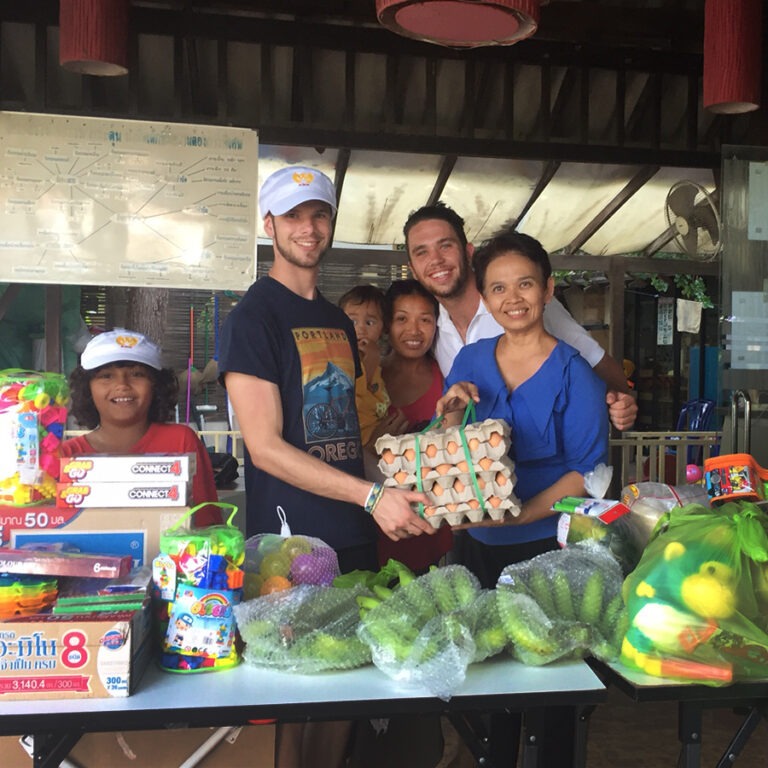
We were able to make a difference with such simple things like pencils and paper to kids who had none of these essential learning tools at eight public schools. It was heartbreaking and yet inspiring to meet so many young people who have so little materially but who care about helping their communities and are determined to succeed in school.
Image Women’s Group of Chemchemi in Arusha:
 KIRF assisted two women’s cooperatives (called “mamas groups” in Tanzania) by supporting their entrepreneurial projects with in-kind donations and funding. KIRF helped a group called the Image Women’s Group of 30 women in Arusha start a party rental business by purchasing their first capital equipment: 32 plastic chairs to rent for an upcoming wedding. KIRF also added $100 USD to their members-only micro credit fund account. Each micro credit loan averages $100 USD for 2 years for a member of the group. Monthly payments are $15 USD and the interest earned from the loan benefits the entire group.
The other mamas group that we were able to help was Fredonia’s Kids Women’s Roots & Shoots group. This group received needed school supplies for it Roots & Shoots youth members and an in-kind donation of Water Girl and Patagonia clothing to help out the disadvantaged “Mamas”.
One HIV-positive mother and daughter out of millions in Africa:
 We got a first-hand look at the problems and discrimination facing poor women who are HIV-positive in Tanzania. AIDS infects about 8.8% of its population of approximately 38 million. About 1.1 million children are AIDS orphans according to the UNAIDS web site. We met an unemployed HIV-positive single-mother and her daughter during our work with Roots & Shoots groups in Arusha. After getting proof of her condition KIRF helped the mother with enough money to pay for her medical care for the next two months. Meeting a mother who knows that she will die and orphan her child because she cannot afford basic medical care is very hard. I wish I could have done more for her during our trip.
Students in two classes at Will Rogers Elementary School in Ventura, California made friendship bracelets for their counter parts in Tanzania as a Roots & Shoots project. In return the Will Rogers teachers got a friendly thank you letter from a Roots & Shoots group leader well as photos and Mt. Kilimanjaro coffee from Tanzania.
 Local businesses in Ventura supported this KIRF relief trip with generous in-kind donations. We brought two donated laptop computers for new Roots & Shoots Arusha office, courtesy of Ventura Printing through the generous efforts of Carol Oliverson who also traveled with me to Tanzania and volunteered for KIRF while there. KIRF delivered 1,000 pencils and other school supplies purchased by the Kirwin family for children’s education. The donated laptops from Ventura Printing and the pencils enabled many youth in Arusha and the Lake Eyasi region to participate in a rural community conservation project called Nature for Kids founded by the Dutch non-profit of the same name. We also delivered Patagonia and Water Girl clothing kindly donated to KIRF for this relief effort.
At least 90% of KIRF donations allocated for this relief trip went directly to helping people in Tanzania. We paid for our airfare and lodging in Tanzania out of our personal funds.
Asante sana!
(“Thank you very much!” in Swahili)
Angela Rockett Kirwin
Co-Founder
Kirwin International Relief Foundation